
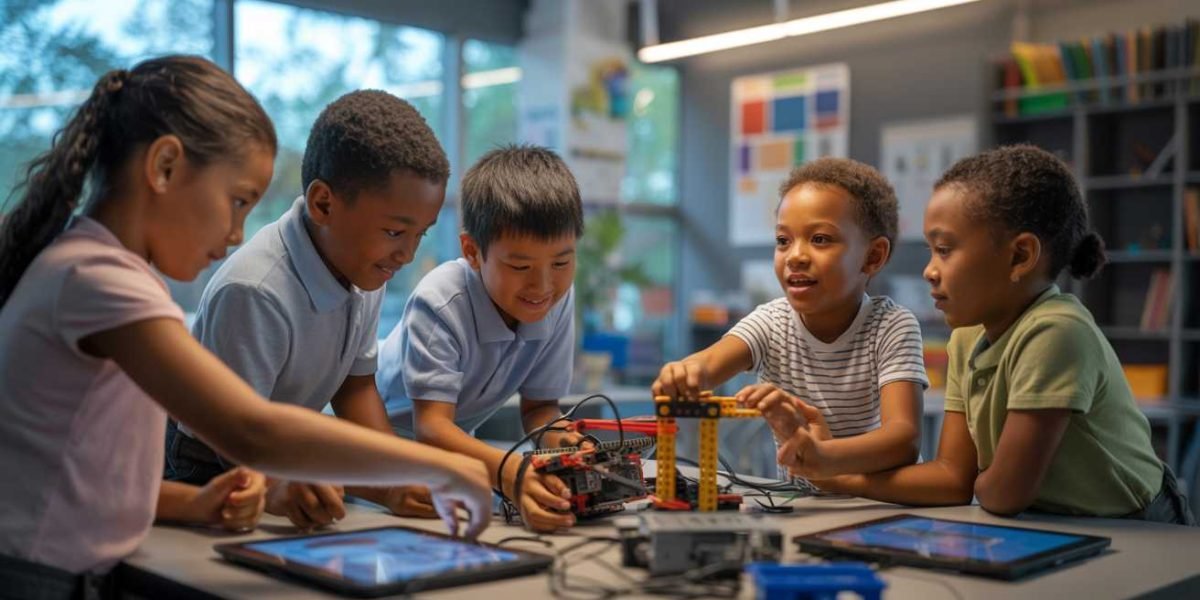
In the ever-evolving landscape of education, the integration of Science, Technology, Engineering, and Mathematics (STEM) has become paramount. Among the various tools facilitating this integration, STEM kits have emerged as powerful instruments in fostering collaborative learning. These kits, rich in hands-on activities and real-world applications, not only enhance students’ understanding of complex concepts but also promote teamwork and communication skills. Their role in modern classrooms is indispensable, offering a dynamic approach to learning that prepares students for the challenges of the future.
Understanding STEM Kits and Their Educational Value
STEM kits are curated packages containing materials and instructions for students to engage in experiments and projects related to science, technology, engineering, and mathematics. These kits are designed to provide practical experience, allowing students to apply theoretical knowledge in tangible ways. The hands-on nature of STEM kits makes learning more engaging and effective, as students can see the immediate results of their efforts and understand the real-world implications of the concepts they study.
The educational value of STEM kits extends beyond the acquisition of knowledge. They encourage critical thinking, problem-solving, and creativity. By working through challenges and experimenting with different solutions, students develop a deeper understanding of the subject matter. Moreover, STEM kits often require collaboration, prompting students to work together, share ideas, and learn from each other, thereby enhancing their interpersonal skills.
The Impact of Collaborative Learning in STEM Education
Collaborative learning in STEM education refers to students working together to solve problems, complete projects, or explore concepts. This approach has been shown to improve learning outcomes, as it encourages active participation and the exchange of ideas. In STEM education, where concepts can be complex and abstract, collaboration allows students to pool their knowledge and skills, leading to a more comprehensive understanding of the material.
Research indicates that collaborative learning fosters a deeper engagement with the content, as students are more likely to invest time and effort when working with peers. It also promotes the development of essential skills such as communication, teamwork, and conflict resolution. These skills are not only valuable in educational settings but are also highly sought after in the workplace, making collaborative learning an essential component of modern education.
STEM Kits as Catalysts for Collaborative Learning
STEM kits serve as catalysts for collaborative learning by providing structured yet flexible opportunities for students to work together. The projects within these kits often require multiple steps and diverse skills, necessitating teamwork. For instance, a robotics kit might involve designing the robot, programming it, and testing its functionality. Each of these tasks requires different expertise, encouraging students to collaborate and learn from each other.
Furthermore, the hands-on nature of STEM kits makes learning more interactive and enjoyable. Students are more likely to engage with the material when they can physically manipulate components and see the results of their actions. This active involvement enhances their understanding and retention of concepts, making STEM kits an effective tool for fostering collaborative learning.
Implementing STEM Kits in the Classroom
Implementing STEM kits in the classroom requires careful planning and consideration. Educators must select kits that align with the curriculum and learning objectives. It’s also essential to ensure that the kits are accessible to all students, taking into account factors such as cost, availability, and the level of difficulty.
Once the kits are selected, teachers can design activities that promote collaboration. Group projects, peer discussions, and joint problem-solving tasks can all be facilitated using the materials provided in the kits. It’s important to establish clear roles and responsibilities within groups to ensure that all students are actively involved and contribute to the project.
Challenges and Solutions in Using STEM Kits
While STEM kits offer numerous benefits, their implementation can present challenges. One common issue is the disparity in resources, as not all schools may have access to the same quality or quantity of kits. This can lead to inequities in learning opportunities among students.
To address this, schools can seek partnerships with organizations that provide STEM resources or apply for grants to fund the purchase of kits. Additionally, educators can utilize open-source materials and online resources to supplement the kits and provide a more comprehensive learning experience.
The Role of Educators in Facilitating Collaborative Learning with STEM Kits
Educators play a crucial role in facilitating collaborative learning with STEM kits. They are responsible for guiding students through the activities, ensuring that collaboration is effective, and providing support when challenges arise. Teachers can model collaborative behaviors, set clear expectations, and create an environment that encourages open communication and mutual respect.
Professional development opportunities for educators are also essential to ensure they are equipped with the knowledge and skills to effectively integrate STEM kits into their teaching. Workshops, training sessions, and collaboration with colleagues can help teachers stay informed about best practices and new developments in STEM education.
Assessing the Effectiveness of STEM Kits in Collaborative Learning
Assessing the effectiveness of STEM kits in promoting collaborative learning involves evaluating both the process and the outcomes. Observations of student interactions, feedback from participants, and analysis of the final projects can provide insights into how well collaboration is occurring and whether learning objectives are being met.
Additionally, assessments can focus on the development of specific skills such as problem-solving, communication, and teamwork. These skills are often best evaluated through qualitative methods, such as peer assessments, self-reflections, and teacher observations, which capture the nuances of collaborative interactions.
The Future of STEM Kits in Education
The future of STEM kits in education looks promising, with advancements in technology and pedagogy continually enhancing their effectiveness. The integration of digital tools, such as augmented reality and online collaboration platforms, can further enrich the learning experience and provide students with new ways to engage with the material.
Moreover, as the demand for STEM professionals grows, the role of STEM kits in preparing students for these careers becomes increasingly important. By fostering an early interest and aptitude in STEM fields, these kits help equip the next generation with the skills and knowledge necessary to succeed in a rapidly changing world.
