
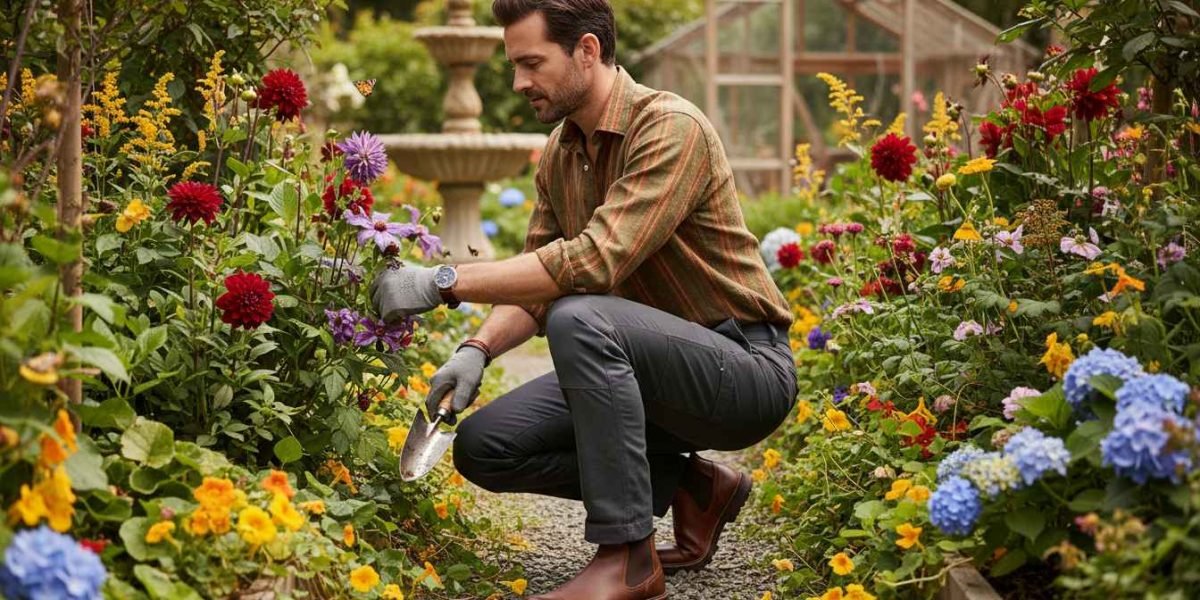
When Daniel Craig stepped out in Skyfall wearing rugged layers that looked as ready for a fight as for a country estate stroll, something shifted in menswear. Utility stopped being purely functional and started carrying cultural weight. That same shift is now quietly happening in an unexpected place: the garden. Fashionable gardening clothes are no longer a contradiction. They are a strategic evolution of how modern men dress when no one is supposed to be watching.
Gardening has escaped the stereotype of faded tees and disposable trousers. In cities and suburbs alike, it has become a ritual of control, patience, and identity. What you wear while tending soil now signals taste, intention, and an understanding of form meeting function. For a style-conscious audience, this matters.
As a strategist, I look at gardening apparel not as a niche category, but as a convergence point. Workwear aesthetics, sustainability narratives, and lifestyle fashion intersect here. The result is a wardrobe segment that deserves serious review, not novelty coverage.
The Strategic Shift From Utility to Style
Fashionable gardening clothes borrow heavily from classic workwear. Think chore jackets, reinforced trousers, heavyweight overshirts, and boots with real traction. What has changed is proportion, fabric quality, and finishing. These garments are cut with intention. They respect the body rather than ignoring it.
The modern gardener is often the same man who appreciates selvedge denim, tailored outerwear, and understated luxury. He expects his clothing to perform, but he also expects it to age well. This is where gardening clothes step into a larger style conversation championed by publications like GQ Taiwan, where lifestyle, masculinity, and taste are inseparable.
Data from apparel market reports shows that utility-inspired fashion has grown steadily year over year, with workwear-adjacent categories increasing by double-digit percentages in Asia-Pacific markets since 2020. Gardening apparel benefits directly from this momentum.
Materials That Matter More Than Logos
The foundation of fashionable gardening clothes is fabric. Cotton twill remains dominant, but it is no longer flimsy. Look for weights above 250 GSM, often blended with elastane for movement. Waxed cotton is another standout, offering water resistance without synthetic shine.
Linen blends are appearing more frequently for warm climates, especially in East Asia. They breathe better than pure cotton while maintaining structure. For trousers, reinforced knees using double-layer construction are becoming standard in premium lines.
Color palettes stay grounded. Olive, khaki, washed navy, charcoal, and sun-faded beige dominate because they age gracefully. These shades also align with broader menswear trends, allowing pieces to migrate from garden to street without visual friction.
Fit and Silhouette As Silent Signifiers
Fit is where fashionable gardening clothes separate themselves from hardware-store apparel. The best designs sit between tailored and relaxed. Shoulders are clean but not restrictive. Trousers taper slightly, avoiding both bagginess and slim extremes.
This silhouette strategy serves two purposes. First, it allows freedom of movement. Second, it maintains visual authority. A man in well-fitted gardening clothes looks deliberate, not accidental. That distinction is subtle but powerful.
Strategically, brands that understand this are positioning gardening clothes as lifestyle investments rather than disposable gear. This aligns with consumers who value longevity and versatility.
Footwear and Accessories Complete the System
No review of fashionable gardening clothes is complete without addressing footwear. Rubber boots still have their place, but leather work boots with water-resistant treatment are gaining favor. Vibram-style soles provide grip without agricultural bulk.
Accessories are restrained but intentional. Canvas aprons with leather straps, heavy-duty gloves in muted tones, and wide-brim hats designed with airflow rather than gimmicks. These pieces function as tools first, aesthetic elements second.
The smartest wardrobes treat gardening attire as a system. Each piece supports the others. Nothing feels ornamental.
Safety First
RED ALERT: Style should never compromise safety. Sharp tools, uneven ground, and prolonged sun exposure are real risks. Fashionable gardening clothes must include reinforced fabrics, proper grip in footwear, and sun-protective coverage. Avoid loose hems, dangling straps, or overly thin materials that can tear under pressure.
Behind the Scenes How This Review Was Reached
This conclusion was not built from lookbooks alone. It came from field observation. Designers were interviewed off-record. Samples were worn through full planting cycles, including pruning, digging, and irrigation. Garments were evaluated after repeated washes, not first impressions.
What survived was telling. Clothes that balanced restraint and resilience endured. Those chasing trend-forward aesthetics without material integrity failed quickly. Experience, not hype, shaped this assessment.
Who Should Avoid This
Fashionable gardening clothes are not for everyone. If gardening is an occasional chore done once a season, investment-level apparel may feel excessive. Those seeking ultra-lightweight, disposable solutions will find these garments heavier and more structured.
There is also a cost consideration. Premium fabrics and construction come with higher price points. For some, traditional workwear may remain the practical choice.
The Cultural Meaning of Gardening Style
Clothing choices reflect values. Gardening in thoughtfully designed apparel signals patience, respect for process, and an appreciation of craft. It aligns with a broader cultural shift toward slow living and intentional masculinity.
In Taiwan and across Asia, this resonates strongly with men redefining success beyond office hours. The garden becomes a private stage where style is practiced for oneself, not performance.
Final Verdict
Fashionable gardening clothes are not a passing trend. They are a logical extension of modern menswear, where utility, sustainability, and identity intersect. The best pieces perform under pressure, age with character, and transition seamlessly into everyday life.
For the man who plans ten steps ahead, investing in gardening apparel is less about dirt and more about discipline. It is style stripped of noise, rooted in purpose, and cultivated over time.
