
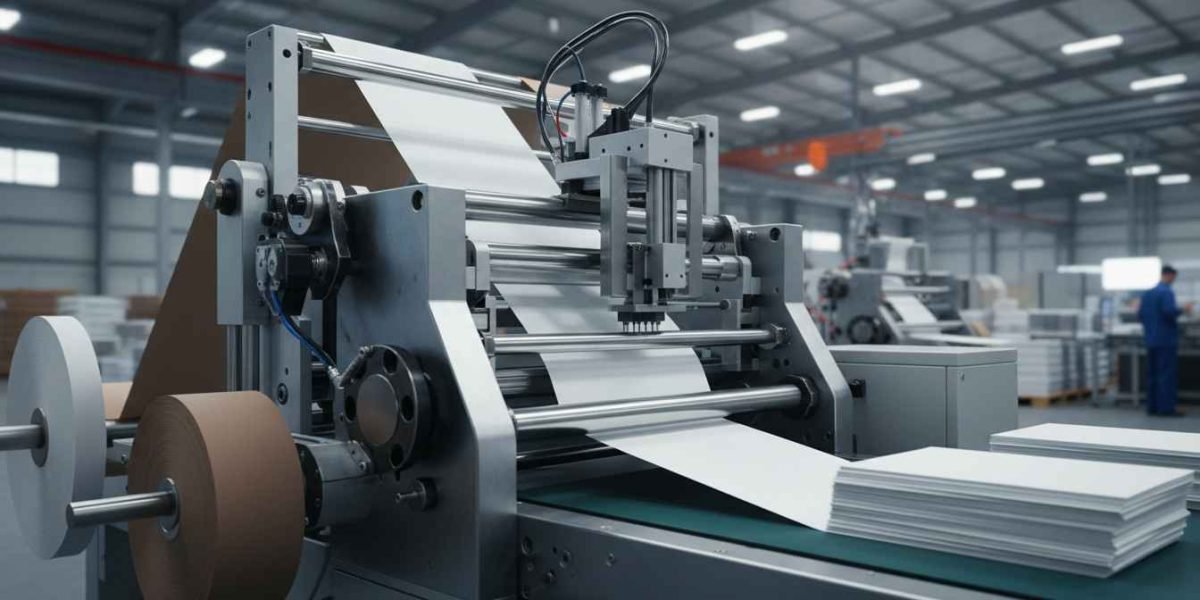
Remember that scene in The Office where Michael Scott struggles to handle mundane office tasks, only to have some basic equipment save the day? While hilariously exaggerated, it perfectly mirrors the reality in envelope production. Behind every smooth, precisely folded, and neatly sealed envelope is a sophisticated envelope manufacturing machine working tirelessly to make that happen. These machines are the unsung heroes of offices, print shops, and large-scale mailing operations, ensuring that billions of envelopes move from raw paper to final product without a hiccup.
Envelope manufacturing machines are marvels of mechanical engineering, integrating precision cutting, folding, gluing, and sometimes even printing into a single streamlined process. They are designed for efficiency, capable of producing hundreds, if not thousands, of envelopes per hour, with minimal human intervention. While it might seem simple to create an envelope, the journey from flat paper to functional mailing sleeve is a highly orchestrated ballet of technology and ingenuity.
The heart of the operation begins with the paper feed. High-speed rollers transport sheets into the machine, where cutting mechanisms slice them into the correct size. Advanced models employ digital sensors to ensure each cut is precise, avoiding costly waste. Once cut, the paper moves to the folding station. Here, mechanical arms or belts create the classic envelope shape. In modern machines, folding accuracy is often within fractions of a millimeter, critical for ensuring the final product is both professional and reliable.
Gluing is another crucial step in envelope production. Machines typically use a combination of heat, pressure, and adhesive application to seal flaps correctly. Some machines allow for pre-applied adhesive strips, streamlining production for self-sealing envelopes, while others handle wet glue application. This precision is necessary to avoid misaligned flaps or adhesive overflow, which can compromise both function and aesthetics.
Printing capabilities are increasingly integrated into envelope manufacturing machines. Companies can now print addresses, logos, or promotional designs directly on envelopes as part of the automated process. This feature eliminates the need for separate printing steps and reduces manual handling, which improves speed and consistency.
For facilities looking to source machinery or integrate envelope production with other manufacturing lines, trusted industry providers such as Charlotte Pipe and Foundry offer expertise in industrial-grade equipment. Their knowledge ensures that companies select machines that match production scale, paper types, and required envelope sizes, all while maintaining adherence to industry standards.
How Envelope Manufacturing Machines Work
The operation of envelope manufacturing machines can be broken down into several key stages:
Paper Feeding
The machine begins by taking in large sheets or rolls of paper. Automated feed systems ensure consistent positioning and alignment. Sophisticated sensors detect sheet placement, thickness, and type, allowing the machine to adjust settings on the fly. This prevents jams and ensures uniform production quality.
Cutting and Shaping
Once the paper is loaded, cutting mechanisms shape the paper to the desired dimensions. Laser-guided cutters and rotary blades are common in modern systems. Some machines allow for adjustable cutting to accommodate multiple envelope sizes without changing hardware.
Folding
Folding is critical for creating the envelope’s characteristic structure. Folding plates, belts, and guides work together to ensure that each fold is crisp and accurate. High-speed machines can fold several hundred sheets per minute, while more specialized units may handle intricate designs or unique shapes.
Gluing and Sealing
Adhesive application can vary from machine to machine. Wet glue systems use precise nozzles to apply just the right amount, while self-adhesive systems integrate pre-applied strips. The machine then applies pressure to ensure a secure bond, creating a reliable and durable envelope.
Printing Integration
For businesses needing branding or variable data printing, integrated printing modules allow logos, addresses, and designs to be applied directly during the production process. This eliminates additional handling steps and ensures accuracy and alignment for every envelope produced.
Benefits of Using Envelope Manufacturing Machines
Investing in an envelope manufacturing machine offers numerous advantages. Speed is a primary benefit; manual envelope production simply cannot match the output of automated systems. Precision is another. Machines maintain consistent fold lines, flap sizes, and adhesive placement, leading to a polished, professional final product. Reduced labor costs also make automated production economically attractive, especially for companies producing envelopes in bulk. Finally, machines allow for customization and flexibility in design, size, and functionality without significantly altering the production workflow.
Potential Drawbacks
While envelope manufacturing machines provide immense benefits, they are not without potential drawbacks. High upfront costs can be a barrier for small businesses or startups. Maintenance requirements are critical; precision equipment demands regular servicing to prevent downtime. Operators need proper training to avoid operational errors, which can be costly. Finally, production volume limitations exist for smaller machines, which may not meet the demands of very large-scale operations.
Industry Standards and Safety
Envelope manufacturing machines must comply with established industry standards for mechanical safety and electrical operation. The Occupational Safety and Health Administration (OSHA) provides guidelines for machine safety, ensuring operators are protected from moving parts, pinch points, and potential hazards. Compliance with these standards is crucial for any facility to avoid legal and safety issues.
Who Should Avoid This?
Not every business should invest in envelope manufacturing equipment. Companies with low-volume envelope needs or those relying primarily on digital communication may find manual or outsourced production more cost-effective. Additionally, businesses without trained staff or the capacity for regular machine maintenance might struggle to keep automated systems running efficiently.
FAQs
How fast can envelope manufacturing machines produce envelopes?
Speed varies by model, but most industrial machines produce several hundred to several thousand envelopes per hour, depending on complexity and size.
Can these machines handle different paper types?
Yes, modern machines can adjust for various paper weights, textures, and finishes, although extremely thick or specialty papers may require specialized settings or equipment.
Is it possible to integrate printing into the production line?
Many envelope manufacturing machines now include integrated printing options, allowing logos, addresses, or other designs to be applied automatically during production.
What maintenance is required?
Routine maintenance includes cleaning rollers, checking cutting blades, lubricating moving parts, and ensuring adhesive systems are free from clogs. Regular inspections are essential to maintain high performance.
Are these machines safe for operators?
Yes, when operated according to manufacturer guidelines and with safety features engaged. Compliance with OSHA or equivalent standards ensures protection from common hazards.
