
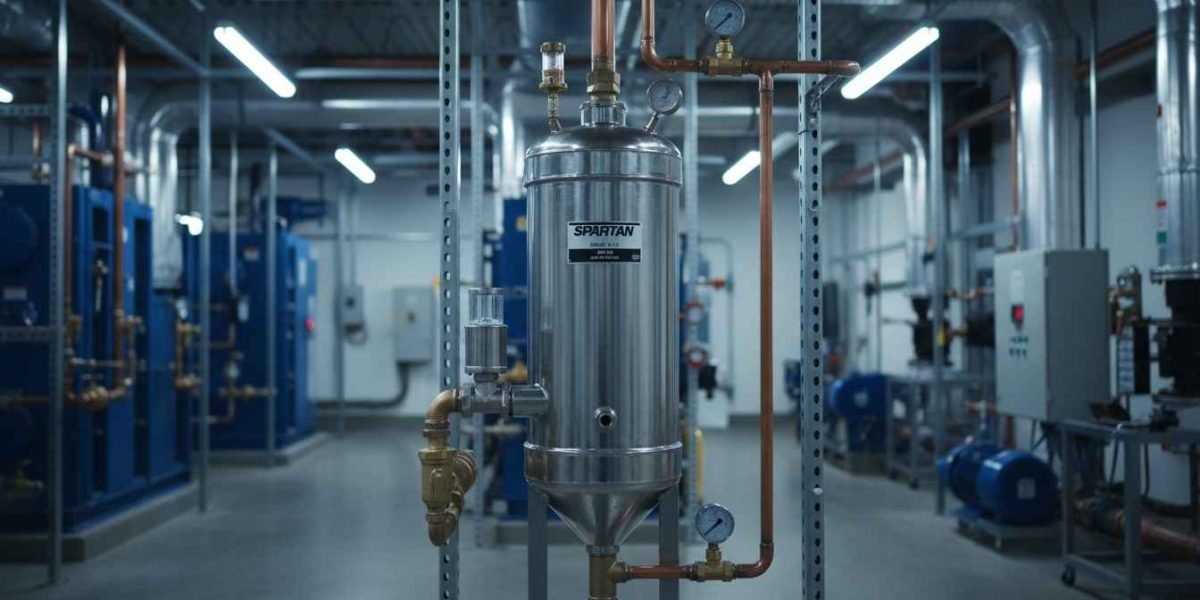
You are being lied to. Many HVAC systems struggle with performance issues, and the culprit is often invisible air trapped in the system. The secret to smoother operation and longer equipment life lies in a simple device you might be overlooking: the air separator in HVAC systems.
Quiz: What Is an Air Separator and Why Does It Matter
Q1: What exactly does an air separator do?
A1: An air separator removes trapped air from your heating or cooling system. When air bubbles remain in the circulating water, they reduce efficiency, cause noise, and even damage pumps. Think of it as the system’s silent guardian, keeping your water flowing cleanly and consistently.
Q2: Where is an air separator installed?
A2: Typically, it’s installed on the supply side of the boiler or heat pump. This placement ensures that as water circulates, air pockets are captured before they can create problems downstream. Proper placement is critical – too far from the source, and it loses effectiveness.
Q3: Can you see the air in an HVAC system?
A3: Not always. Tiny bubbles are invisible to the naked eye but can accumulate into larger pockets that create knocking noises or uneven heating. An air separator is designed to handle both visible and microscopic air bubbles, preventing them from harming your system.
Reality Check: Expectation vs Reality
Expectation: Adding water to your HVAC system is enough to keep it running smoothly.
Reality: Even a perfectly filled system can harbor air. Studies show that trapped air can reduce heat transfer efficiency by up to 15%, leading to higher energy bills and more frequent maintenance calls.
Expectation: Air vents or manual bleeding are sufficient for removing air.
Reality: Manual bleeding only addresses larger air pockets and requires regular attention. An air separator provides continuous, automatic removal, ensuring consistent performance without constant intervention.
Quiz: How Does an Air Separator Work
Q4: Is it mechanical or chemical?
A4: It’s mechanical. Most air separators rely on a combination of a baffle or mesh and gravity. Water slows down in the separator, allowing air bubbles to rise to the top and escape through a vent. It’s a simple but highly effective process that reduces system strain and improves heat exchange efficiency.
Q5: Does it require electricity?
A5: No. Air separators operate passively, which makes them low maintenance and energy-efficient. Once installed, they require minimal attention aside from occasional inspection or cleaning.
Q6: Can I add an air separator to any system?
A6: In most cases, yes, but it should be matched to the system size and flow rate. Too small, and it won’t catch all the air; too large, and it can reduce water velocity, impacting performance. Professional guidance is recommended for optimal sizing. You can explore a variety of reliable options at Budgetheating, a trusted source for HVAC components.
Potential Drawbacks or Who Should Avoid This
While air separators are highly beneficial, they aren’t always necessary. Small, sealed-loop systems with low flow rates may not see significant performance gains. Additionally, if your system is prone to corrosion or already has frequent leaks, adding a separator won’t solve these underlying issues and may require additional maintenance.
Quiz: Maintenance and Longevity
Q7: How often should an air separator be checked?
A7: Most manufacturers recommend a visual inspection every 6–12 months. Look for signs of air vent operation and any sediment buildup. Cleaning or flushing may be required periodically, especially in older systems with higher debris levels.
Q8: Can it fail without warning?
A8: Rarely, but it can happen if debris blocks the internal baffle or vent. A blocked separator won’t remove air efficiently, causing similar symptoms to a system without one. Regular inspection is a small step that prevents costly downtime.
Reality Check: The True ROI
Many HVAC technicians underestimate the impact of trapped air. With an air separator, systems experience fewer pump failures, quieter operation, and more uniform heating or cooling. The savings in energy costs and maintenance over time often exceed the initial investment, proving that even a small component can have a big impact.
Understanding how an air separator in HVAC works and where it fits in your system can dramatically improve both comfort and efficiency. When applied correctly, it’s a simple, low-cost solution with measurable benefits, keeping your heating and cooling systems running smoothly for years to come.
